Why Most Indians Buy the Wrong Pain Relief Device
Walk into any pharmacy or search on Amazon India and you will find dozens of devices with electrode pads that all look nearly identical. Some are labelled TENS. Some say EMS. Many claim to do both. Most Indian buyers pick one based on price or looks — and then wonder why it is not working the way they expected. The reason is almost always this: TENS and EMS are fundamentally different technologies designed for completely different purposes. Knowing which one matches your problem is the only thing that matters.
What Is TENS? How Does It Work?
TENS stands for Transcutaneous Electrical Nerve Stimulation. A TENS device sends low-voltage electrical pulses through electrode pads placed on the skin directly to the sensory nerves underneath. These pulses work in two ways. First, they flood the nervous system with non-painful signals that compete with pain signals trying to reach the brain — this is called the Gate Control Theory of pain. Second, they stimulate the body to produce endorphins, which are natural pain-blocking chemicals the body produces. The result is pain relief that feels like a tingling or buzzing sensation. TENS does not cause your muscles to contract. It does not build muscle strength. Its one job is to reduce the sensation of pain — and it does this well for nerve-related and chronic pain conditions including arthritis, sciatica, fibromyalgia, and lower back pain.
What Is EMS? How Does It Work?
EMS stands for Electrical Muscle Stimulation. An EMS device sends higher-frequency electrical pulses through electrode pads placed directly over muscle tissue. These pulses stimulate the motor neurons — the nerve cells that control muscle movement — causing the muscles themselves to contract and relax in therapeutic cycles. This mimics the signals your brain normally sends to your muscles during physical exercise. The result is improved blood circulation in the targeted muscle, breakdown of lactic acid and muscle knots, reduction of swelling and inflammation, and gradual strengthening of the muscle tissue. EMS is the technology used in physiotherapy clinics across India and in professional sports rehabilitation. It addresses the root cause of muscle-tension pain — not just the sensation of pain.
EMS vs TENS — The Core Difference Explained Simply
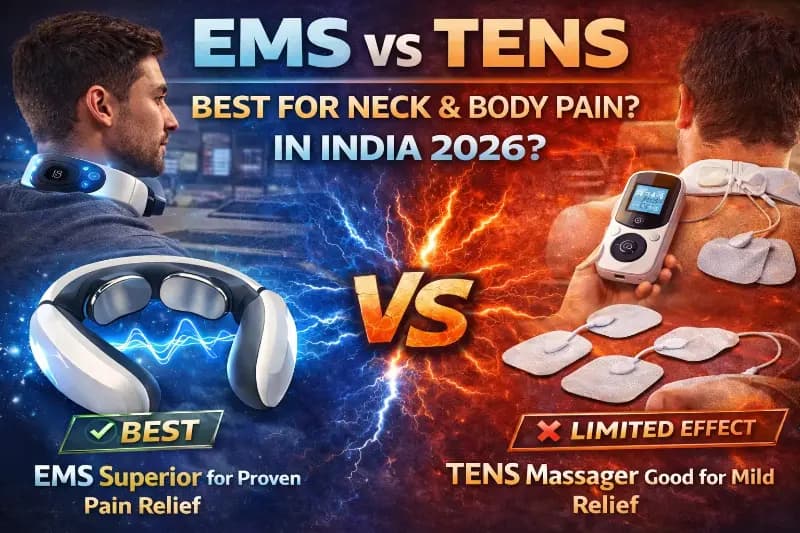
TENS talks to your nerves and tells them to stop sending pain signals to your brain. EMS talks to your muscles and tells them to contract, relax, and improve blood flow. TENS provides pain relief during and immediately after use. EMS provides therapeutic improvement in muscle health that reduces pain over time with regular use. If your pain is nerve-related — sharp, shooting, or associated with conditions like sciatica or arthritis — TENS is the right technology. If your pain is muscle-related — stiff, tight, or caused by tension, poor posture, or long hours at a desk — EMS is more effective because it addresses the actual muscle problem, not just the pain signal.
Which Is Better for Neck Pain from Desk Work in India?
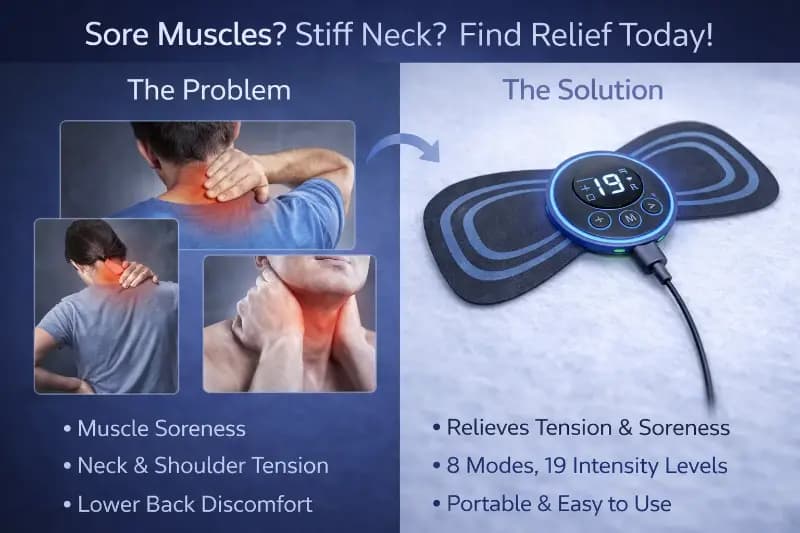
For the most common type of pain among Indian professionals in 2026 — chronic neck and shoulder tension caused by prolonged screen use, poor posture, and hours of sitting — EMS is the superior choice. Here is why. Desk-related neck pain is caused by muscle tension. When you sit hunched over a screen for 8 hours, the muscles in your neck and upper back remain contracted for extended periods, reducing blood flow and building up tension and lactic acid. TENS can mask the pain sensation temporarily, but it does not stimulate the muscle, improve blood flow, or break down the tension causing the pain. EMS directly stimulates the contracted muscles, forces them through therapeutic contraction-relaxation cycles, flushes out lactic acid, and restores circulation — addressing the root cause. Studies on occupational musculoskeletal disorders consistently show that the neck is the most commonly affected body region among office workers, with prevalence rates of 31 to 54 percent in IT and desk-based professions. The scale of this problem in Indian cities like Bengaluru, Mumbai, Delhi, Hyderabad, and Pune is enormous. EMS is the clinically validated response to this specific type of pain.
TENS vs EMS — Full Comparison
Here is a side-by-side breakdown of both technologies across every factor that matters for an Indian buyer in 2026.
Target: TENS targets sensory nerves. EMS targets motor nerves and muscle tissue directly.
Mechanism: TENS blocks pain signals from reaching the brain and triggers endorphin release. EMS causes therapeutic muscle contractions that improve circulation and break down tension.
Best for: TENS is best for nerve pain, arthritis, sciatica, fibromyalgia, and post-surgical pain. EMS is best for muscle tension, desk-related neck and shoulder pain, post-workout recovery, and muscle rehabilitation.
Relief type: TENS provides temporary pain masking during and shortly after use. EMS provides progressive therapeutic improvement with consistent daily use.
Sensation: TENS produces a tingling or buzzing sensation. EMS produces a pulsing, contracting muscle sensation — like a deep-tissue massage from inside.
Current strength: TENS uses lower-intensity current targeting superficial nerves. EMS uses higher-intensity current (20 to 100 Hz) to reach motor neurons.
Muscle contraction: TENS does not cause muscle contraction. EMS causes rhythmic contraction and relaxation of the targeted muscle.
Long-term benefit: TENS has limited long-term structural benefit. EMS improves muscle health, circulation, and reduces chronic tension over time.
Use in physiotherapy: Both are used in clinical settings, but EMS is the standard for muscle rehabilitation and post-injury recovery.
Who Should Buy a TENS Device?
Buy a TENS device if your pain is primarily nerve-related — sharp, shooting, or burning pain associated with conditions like sciatica, arthritis, diabetic neuropathy, or nerve damage. TENS is also appropriate for post-surgical pain management and for people who need temporary pain relief while their body heals from an injury. TENS devices in India typically cost between ₹1500 and ₹4000 from brands like AGARO and Dr Physio.
Who Should Buy an EMS Device?
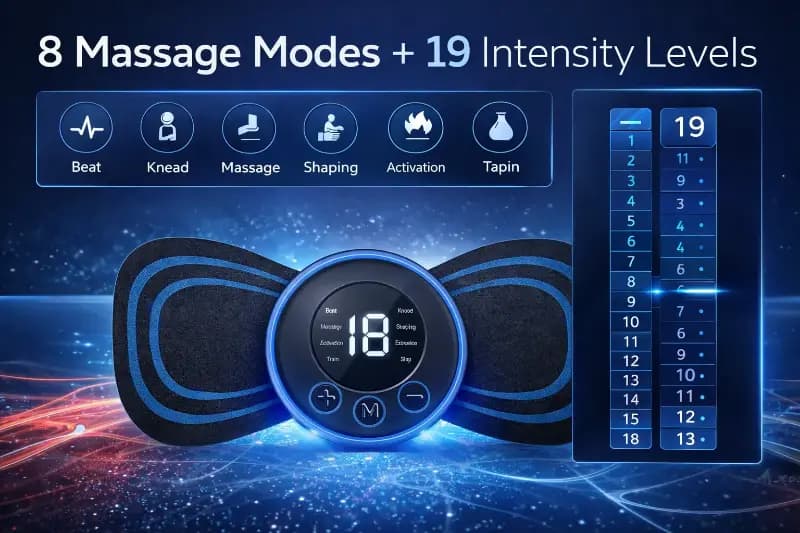
Buy an EMS device if your pain is muscle-related — stiff, tight, or achy muscles caused by prolonged sitting, poor posture, desk work, screen time, or exercise. EMS is also the right choice for anyone who wants to use the same technology physiotherapists use, at home, at a fraction of the cost of clinic sessions. The EMS Neck and Body Massager available at ViralViewCart.com is priced at ₹499 — making it the most accessible entry point for EMS technology in India in 2026. It has 8 massage modes and 19 intensity levels covering everything from gentle warm-up to deep therapeutic stimulation.
Can You Use Both TENS and EMS?
Yes. Some conditions benefit from both technologies used together or alternately. For example, someone recovering from a neck injury might use EMS to rebuild muscle strength and restore circulation, and TENS to manage the associated nerve pain during recovery. Many combination devices exist in India at ₹1500 to ₹4000 that offer both TENS and EMS modes in one unit. However, for the most common complaint among Indian desk workers — pure muscle-tension neck and shoulder pain — EMS alone is sufficient and the more cost-effective choice.
Price Comparison: EMS vs TENS Devices in India 2026
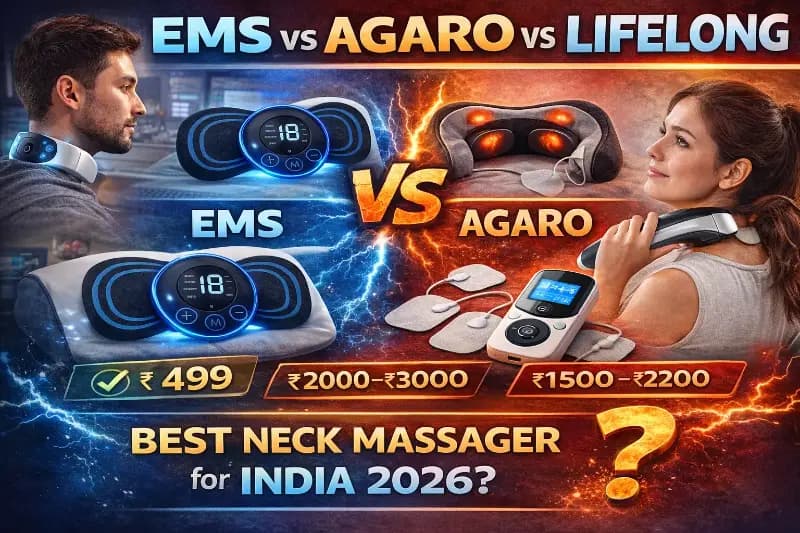
A dedicated TENS device in India costs between ₹1500 and ₹4000 depending on the brand and number of modes. AGARO and Dr Physio are the most searched brands in this category. A dedicated EMS device in India ranges from ₹499 to ₹3000. The EMS Neck and Body Massager from ViralViewCart.com at ₹499 is currently the best-value EMS device available in India — with 8 modes, 19 intensity levels, wireless design, and USB rechargeability. It performs the same core function as devices costing 5 to 6 times more.
Safety Guidelines for Both EMS and TENS
Both EMS and TENS are safe for daily use when used correctly. Limit each session to 20 minutes per body area. Do not use either device if you have a cardiac pacemaker, are pregnant, have epilepsy, or have open wounds or skin conditions at the electrode placement site. Do not place electrode pads directly on the spine, throat, or across the chest. Start at the lowest intensity level and increase gradually over the first week of use.
The Verdict: EMS vs TENS for Indian Desk Workers in 2026
For the majority of Indians experiencing neck, shoulder, and upper back pain from desk work and screen use — EMS is the correct technology. It addresses the muscle tension that causes the pain, not just the pain signal. TENS is excellent for nerve-related pain but does not stimulate muscles or improve circulation. The EMS Neck and Body Massager from ViralViewCart.com at ₹499 brings clinically validated EMS technology to any Indian home at a price that costs less than a single physiotherapy session. If you have desk-related neck pain and have never tried EMS, this is where to start.
Frequently Asked Questions
Is EMS or TENS better for neck pain in India?
For neck pain caused by desk work, prolonged screen use, or muscle tension — EMS is better. It directly stimulates the muscles causing the pain, improving blood flow and breaking down tension. TENS is better for nerve-related or sharp shooting pain. Most neck pain among Indian office workers is muscle-tension-based, making EMS the more effective choice.
What is the difference between EMS and TENS massager?
TENS (Transcutaneous Electrical Nerve Stimulation) targets sensory nerves to block pain signals and trigger endorphin release. EMS (Electrical Muscle Stimulation) targets motor nerves to cause therapeutic muscle contractions that improve circulation and break down tension. TENS masks pain. EMS treats the muscle causing the pain.
Can I use an EMS massager every day?
Yes. EMS massagers are safe for daily use. Limit sessions to 20 minutes per body area per day. Starting at a low intensity level and increasing gradually over the first week gives the best results without discomfort. Most users see significant reduction in neck stiffness after 5 to 7 days of consistent daily use.
Where can I buy the best EMS massager under ₹500 in India?
The best EMS massager under ₹500 in India is the EMS Neck and Body Massager at ViralViewCart.com, priced at ₹499 with 44% off, 8 modes, 19 intensity levels, wireless design, and free shipping across India.
Is TENS safe to use at home without a doctor?
Yes, TENS is generally safe for home use without a prescription for most adults. Avoid use if you have a pacemaker, are pregnant, have epilepsy, or have active cancer. Always start at the lowest intensity setting and follow the product guidelines. When in doubt, consult a physiotherapist before starting.
What does EMS feel like compared to TENS?
TENS produces a mild tingling or buzzing sensation — like gentle static electricity on the skin. EMS produces a deeper, pulsing sensation as the muscles contract and relax — similar to the feeling of a deep-tissue massage from the inside. EMS is more intense than TENS and is usually set at a lower intensity for comfort during early sessions.